Is Cold Brew Coffee Good for Stomach
We start by asking whether this chilled, slow-steeped drink can be gentler on our digestion. The basic method is simple: coarsely ground beans steep in cold water for 12–24 hours, then the concentrate is usually diluted before we sip.
Lab pH measures often put both brewed hot and chilled versions in a similar acidity range. Yet extraction differences make the flavor smoother, and many people say that feels easier to digest.
A typical diluted cup delivers about 100 mg of caffeine, roughly on par with a standard hot cup. The drink also supplies antioxidants like chlorogenic acids that mirror many known benefits.
We note individual variability. Brewing time, dilution, oils, and other compounds influence how our gut reacts. Later sections will compare evidence, explain chemical drivers, and offer practical steps to make a gentler cup.
What we know right now about cold brew and stomach comfort
Here’s what current data and daily experience tell us about stomach comfort with cold extraction methods.
Measured pH values for cold brew and hot coffee commonly fall near 5–6, though some tests show the chilled method can test slightly less acidic. Antioxidants like chlorogenic acids appear in both, but total antioxidant levels may differ between methods.

- Many people report fewer reflux or heartburn episodes after switching, even when pH numbers stay close.
- Caffeine usually remains similar in a diluted serving, so sensitivity to that stimulant can still affect stomach comfort.
- Long, cool extraction alters which oils, acids, and carbohydrates end up in the cup. That shift may explain why some find it gentler.
| Attribute | Cold method | Hot method |
|---|---|---|
| Measured acidity | ~5–6 | ~5–6 |
| Perceived bite | Smoother | Sharper |
| Research depth | Limited | Extensive |
Overall, studies are limited, so we combine lab findings with brewing chemistry and user reports. Water, grind, and brewing approach matter. The choice should weigh taste and how our body reacts, not pH alone.
Why cold brew can be easier on the stomach
When we let grounds steep in cool water for many hours, the extraction favors a different mix of acids, oils, and aromatics. This shift can soften flavor and reduce the sharp bite that some of us link to gut irritation.
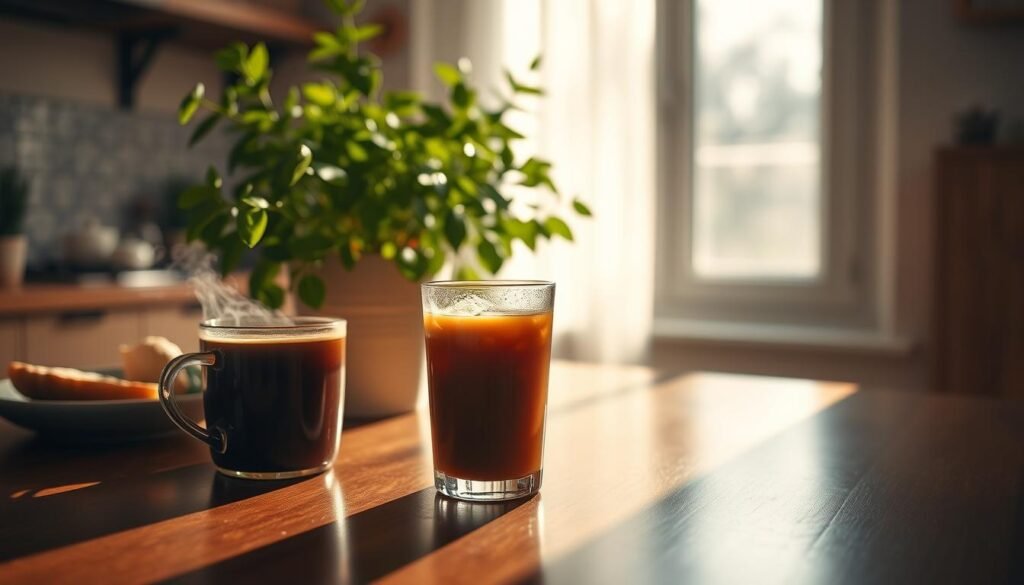
Acidity and extraction: how time and cold water change the brew
Using coarse grounds and long contact time pulls fewer of the harsh acids that heat releases quickly. Measured pH can stay similar to hot water methods, yet the perceptible acid and bitterness often fall.
Protective compounds and crude polysaccharides
Coffee contains crude polysaccharides and other compounds that may coat or support the digestive lining. Those carbohydrates can blunt irritation and create a gentler mouthfeel.
Caffeine content and sensitivity: what a typical cup delivers
A diluted serving normally delivers about 100 mg caffeine, like a standard cup. Concentrates can reach near 200 mg, so dilution matters for anyone sensitive to stimulation.
- Coarse grind + 12–24 hours limits over-extraction of bitter acids.
- Quality beans and clean water reduce off-flavors that mimic acidity.
- More dilution or decaf helps if caffeine content triggers symptoms.
| Extraction factor | Cold method | Impact on stomach |
|---|---|---|
| Acid profile | Fewer sharp acids | Softer flavor, less bite |
| Polysaccharides | Retained in cup | May buffer irritation |
| Caffeine content | ~100 mg diluted / ~200 mg concentrate | Watch portions for sensitivity |
Is Cold Brew Coffee Good for Stomach: what studies and comparisons suggest
Recent comparisons mix lab tests with user reports to weigh how each cup affects reflux and comfort.

Cold brew vs. hot coffee: acidity, bitterness, and reflux symptoms
Measured pH usually lands near 5–6 for both methods, so acidity on paper looks similar.
Perception differs: chilled extraction often tastes less bitter, and many of us report fewer heartburn episodes after switching to cold brew.
Still, individual responses vary. Serving size, dilution, and caffeine sensitivity shape outcomes more than brand alone.
Antioxidants, heart and metabolic effects that can influence gut comfort
Both preparations supply chlorogenic acids, quinides, trigonelline, lignans, magnesium, and diterpenes. These compounds link to improved insulin sensitivity and modest blood pressure effects.
Anti-inflammatory activity from antioxidants may support overall health and reduce gut irritation for some people.
- While pH differences are small, extraction shifts which acids and oils appear in the cup.
- Typical diluted servings deliver roughly equal caffeine (~100 mg), so watch timing and portions.
- Try a side-by-side trial of equal-strength servings to judge reflux and comfort over several days.
| Attribute | Cold method | Hot method |
|---|---|---|
| Perceived bitterness | Lower | Higher |
| Measured pH | ~5–6 | ~5–6 |
| Typical diluted caffeine | ~100 mg | ~95 mg |
How to brew and choose a gentler cup at home
A few simple changes in our at-home routine make a marked difference in how a cup feels. We focus on grind size, steep time, clean filtration, and bean choice to reduce bite and improve comfort.
Dial in the process: coarse grounds, 12–24 hours, and smart filtration
Use 1 cup of coarsely ground coffee beans with 4 cups of water. Steep in the refrigerator 12–24 hours, then strain through a fine mesh lined with cheesecloth to make a concentrate.
Store sealed for up to two weeks and dilute 1:1 with water over ice. For a cleaner, less oily cup, pass the concentrate through a tight-weave paper filter.
Beans and roast: choose lower-grown, natural process, and darker roasts
Lower-grown and naturally processed lots often taste less sharp. Medium-dark to dark roasts bring chocolate and caramel notes that feel gentler on the palate.
Grind size, immersion, and diluting with water or cream
Coarse grind plus immersion methods (cold steep or French press) limit extraction of sharper acids compared with fine-grind drip using hot water. Start with a 1:4 ratio and adjust steep hours or dilution to suit our taste.
A 1:1 dilution is a reliable baseline; add a splash of cream to soften edges if needed. Label batches with bean, roast, and steep time so we can repeat what works.
- Coarse grind + 12–24 hours = smoother extraction.
- Double filtration reduces oils and perceived acidity.
- Try side-by-side samples to find ideal flavor and comfort.
| Step | Recommendation | Why it helps |
|---|---|---|
| Grind | Coarse | Reduces over-extraction of sharp acids |
| Steep time | 12–24 hours | Balances strength and gentleness |
| Filtration | Mesh + paper | Removes oils that can taste harsh |
| Dilution | 1:1 with water; cream optional | Controls caffeine and smooths mouthfeel |
Smart drinking strategies for sensitive stomachs
We can reduce reflux by adjusting how, when, and what we drink. Timing and small serving changes often cut symptoms for people with sensitive stomachs.
Cold brew, espresso, and timing your cup with food
Many drinkers report fewer reflux episodes with cold brew. Espresso can also be gentler for some people because short extraction and darker roasts often yield sweeter, fuller cups.
Eat before or with a cup to buffer acids. Oatmeal, toast, or yogurt blunt acid reflux and lower heartburn risk.
- Start with a single, smaller cup and note how our stomach responds.
- Space the drink away from citrus, tomatoes, and other high-acid foods to reduce compounded reflux.
- Try immersion methods and coarser grinds at home if we feel sensitive to stronger extraction.
| Action | Why it helps | Practical tip |
|---|---|---|
| Pair with food | Buffers acid | Eat toast or oats before drinking |
| Limit intake | Controls caffeine content and total load | Stick to one small cup; dilute if needed |
| Track reactions | Identifies patterns with reflux | Record time, strength, and what we ate for a week |
If symptoms persist, we should discuss intake with a clinician. Simple serving tweaks—more dilution, milk or cream, slower sipping, and hydration—often help without giving up the drink entirely.
Our bottom line on cold brew and a calmer stomach
Our closing view weighs practical benefits of slow-steeped extraction against individual sensitivity. Steeping 12–24 hours and diluting about 1:1 often yields a smoother, less bitter cup than hot coffee while keeping similar caffeine and many antioxidants.
Measured acidity does not tell the whole story. Changes in which acids, oils, and polysaccharides reach the cup can make the drink feel less acidic in practice. At home, coarse grounds, paper filtration, darker roasts, and timing a cup with food help most people reduce reflux.
We recommend personal testing: adjust dilution, serving size, and sugar or cream to find what suits our stomach. If symptoms persist, seek medical guidance. With a careful process and simple finishing touches, most of us can enjoy cold brew coffee comfortably and consistently.